
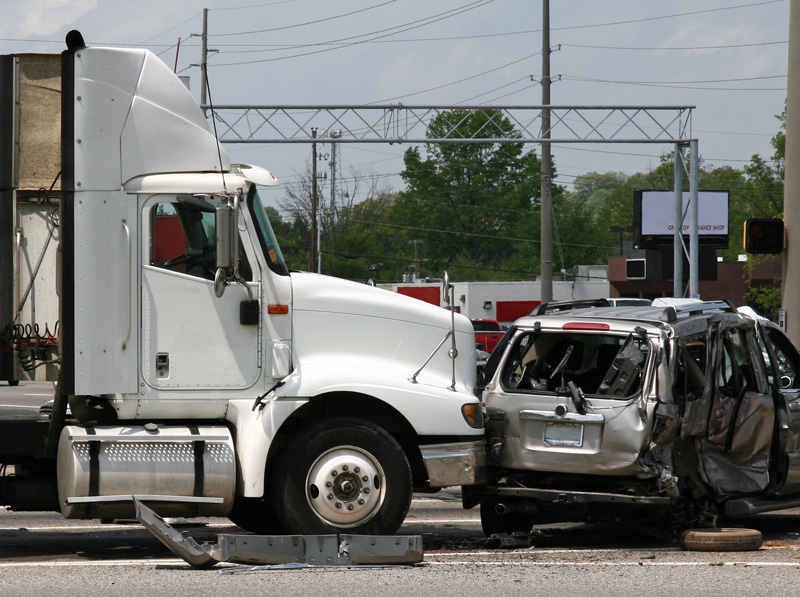
Fatal Truck Accidents in Texas: Claims & Survivors’ Rights
When large commercial vehicles like tractor-trailers, delivery trucks, and tankers collide with smaller cars and trucks, serious injuries and fatalities can result. According to the National Safety Council, Texas consistently leads the nation in truck accident fatalities, recording 806 of these deaths in 2021.
If someone you care for dies in a fatal truck accident, the aftermath can be emotionally and financially devastating. As a surviving family member, you’ll never be able to bring your loved one back, but you can sue for compensation that provides relief as you grieve. When negligence causes a tragic accident, the decedent’s estate can take legal action against liable parties by hiring a truck accident attorney to recover damages. At PM Law Firm, our commercial truck accident lawyers can help you get the money you and your family deserve. We’ll review your legal rights and guide you through the claims process so you can heal while we pursue justice.
Below, we’ll discuss legal options for families, what a wrongful death claim entails, causes of fatal truck accidents, the types of damages you can pursue, and other considerations that can lead you to seek the service of a truck accident lawyer.
Legal Options for Families After Fatal Truck Crashes
If you’re an immediate family member of a victim who died in a truck crash, the Texas Wrongful Death Act (Tex. Civ. Prac. & Rem. Code §§ 71.001–71.012) gives you the right to file wrongful death lawsuits and survival actions to recoup your losses. Surviving spouses, children, parents, and legal representatives for the estate can sue for compensation for funeral expenses, the loss of future support and income, loss of companionship, and emotional anguish. They can also file survival actions, which are claims the victim would have pursued had they lived, including compensation for medical bills, lost wages, pain and suffering, and long-term care.
What Is a Wrongful Death Claim?
A wrongful death claim is a civil lawsuit that seeks economic and non-economic compensation for family members whose loved one died due to negligence. To succeed, the claim must meet these four criteria:
1. Duty of Care
When a commercial truck is on the road, the driver, trucking company, truck manufacturer, or other responsible party must take reasonable action to prevent harm. For instance, duty of care might include a driver’s duty to operate their truck safely, a manufacturer’s duty to withhold defective products, or an employer’s duty to enforce limits on operating hours.
2. Breach of Duty
There must be evidence to show that the responsible party’s action or inaction resulted in a failure to meet their obligations to the victim. For instance, evidence of driving over the speed limit, a manufacturer’ defect that led to mechanical failure, or a lapse in vehicle maintenance could all constitute a breach of duty.
3. Causation
Expert testimony or other evidence must establish that the responsible party’s breach of duty directly led to death. Accident reconstruction specialists, engineers, and workplace safety professionals commonly provide this testimony.
4. Damages
There must be a “preponderance of the evidence” to show that the wrongful death has caused, is causing, or will cause measurable economic and non-economic losses to surviving family members. In a truck crash case, this typically involves establishing negligence, which occurs when a party behaves in a way that a reasonable person would think of as dangerous or reckless, even if the harm that follows was unintentional.
Who Will Pay My Wrongful Death Claim?
In Texas, the party or parties who cause a trucking accident after violating state and federal laws are responsible for paying damages. Texas is an at-fault state, which means that the at-fault party or parties must compensate all wrongful death victims for their accident-related expenses. A court may hold commercial truck drivers, trucking companies, maintenance contractors, and vehicle and parts manufacturers responsible for a truck crash, and it’s not uncommon for multiple parties to share liability. For instance, if a truck goes on the road after missing or failing an inspection, and its defective tires cause a blowout that leads to a crash, the trucking company and the tire manufacturer may be held responsible.
An experienced truck collision attorney can investigate your case, identify liable parties, negotiate with insurance adjusters, and take legal action on your behalf.
Common Causes of Fatal Truck Accidents in Texas
When large trucks collide with smaller vehicles, their size, weight, and speed are likely to cause catastrophic damage, injuries, and fatalities. Common causes of these accidents include:
• Driver Fatigue: Although federal regulations require commercial truck drivers to stop and rest after eight hours on the road, these drivers and their trucking companies sometimes ignore the rules. Fatigue can impair concentration and cause drivers to react too slowly and make errors in judgment that lead to accidents.
• Distracted Driving: Commercial truck drivers who are texting, adjusting their GPS systems, or eating while they’re on the road may not be giving their full attention to the traffic around them, and their inattention may lead them to crash.
• Impaired Driving: Drunk or drugged commercial truck drivers are more likely than sober drivers to lose control of their vehicles and cause terrible accidents. Because commercial trucks are so large, their impaired drivers also put occupants of smaller vehicles at greater risk of death after a crash.
• Lack of Experience or Training: Trucking companies are responsible for hiring properly licensed drivers who are trained and capable enough to operate large trucks safely and avoid hazards.
• Speeding or Reckless Driving: When drivers are under pressure to meet deadlines, they may be more likely to speed, weave in and out of lanes, tailgate, cut off other drivers, ignore traffic signs, and otherwise drive aggressively, which can significantly increase the chance of crashing.
• Inadequate Maintenance: Commercial trucks must undergo regular maintenance to be road-safe. If truck drivers, trucking companies, or mechanics put off or fail to execute thorough inspections and tune-ups, malfunctioning components may cause truck wrecks.
• Improper Loading: Overloading a truck with heavy cargo can make it harder to control and more likely to crash. Improperly secured and poorly balanced loads can shift during transit, leading their truck to roll over, jackknife, or spill its contents onto the road and cause an accident.
• Employer Negligence: If a trucking company fails to properly supervise or maintain the trucks it owns and neglects to protect, train, and dispatch its drivers, it may be liable for accidents.
• Faulty Components: If a manufacturer produces a defective part that malfunctions and contributes to a truck accident, they may be held partly or fully accountable for the crash due to negligence.
Potential Recoverable Damages in Wrongful Death Suits
Commercial trucks are so big and heavy that even lower-speed impacts can have catastrophic effects. When a truck crash causes a fatality, a wrongful death lawsuit can yield families the financial support they need to recover and secure their future.
In Texas, families can seek both economic and non-economic damages when a commercial truck accident causes a wrongful death. If the driver or trucking company engaged in gross negligence or willful misconduct that caused the accident, the court may also award punitive damages.
Economic Damages
Economic damages include lost income and benefits, funeral expenses, and medical costs, plus other bills with a known monetary value that result from a truck crash.
Funeral and Burial Costs
Compensation for funeral and burial costs includes payment for “reasonable” expenses like funeral and memorial services and burial or cremation, plus costs for a burial plot, casket, headstone, and other related expenses.
Medical Expenses
Compensation for medical expenses includes medical bills and other direct costs of care, such as ambulance rides, hospital stays, and emergency surgeries, provided after the accident incurred before death.
Loss of Financial Support
Compensation for lost wages or lost future earnings recognizes the support this money would have provided the family. For instance, if the deceased was a 40-year-old who contributed $80,000 per year at the time of death and had 20 more years of prime earning potential, a jury might award 1.6 million in lost future earnings.
Non-Economic Damages
Non-economic damages pay for the loss of companionship, pain, and suffering surviving family members experience after a fatal truck accident. These intangibles have no set value because they cannot be billed, so lawyers, juries, courts, and insurance agents must determine the final award.
Loss of Companionship or Consortium
Compensating surviving family members for loss of companionship is an acknowledgement of the emotional toll of a fatal truck accident. The nature of the relationship may influence the amount of the award.
Pain and Suffering
Surviving beneficiaries may recover compensation for past and future mental anguish, emotional distress, anxiety, depression, grief, mourning, and psychological trauma. Juries, insurance companies, and lawyers have broad leverage to calculate damages. Wrongful death claims usually result in higher-value awards for pain and suffering because fatalities are severe and permanent.
Punitive Damages
Punitive damages exist to punish the at-fault party for gross negligence and recklessness and deter that activity in the future. Gross negligence includes active disregard for the safety of people owed a duty of care.
How Are Damages Calculated?
Insurance companies, lawyers, and juries use different methods to calculate damages. For economic damages that are tied to actual bills, an insurance adjuster may use a multiplier between 1.5 and 5 that correlates to the severity and permanence of the injury. Awards can vary by case. A wrongful death case may go to trial when lawyers consider a fatality to be too severe to calculate with a multiplier formula.
Several factors, based on the real-world consequences of a truck accident, impact how jurors, lawyers, insurance adjusters, and courts choose to calculate damages for pain and suffering, including:
• Severity and Permanence: If the consequences of a truck accident are extreme and irreversible, the compensation for pain and suffering will tend to be higher.
• Disruption to Normal Life:When a wrongful death causes extreme disruption to daily activities, relationships, and the ability to enjoy life, the court may award higher damages.
• Suffering Experienced During Medical Treatment: Intensive, invasive, painful, ongoing, and long-term medical care often reflect higher levels of suffering before death.
• Documented Mental Anguish: Therapy records of the emotional and psychological effects of a truck accident, such as PTSD, anxiety, depression, sleeplessness, and fear experienced by the decedent and their family members, may reveal intense suffering that merits a high compensatory payout.
• Evidentiary Support: Doctors’ statements, medical records, photos of injuries, witness testimonies, and written personal accounts of pain can support your claim for a reward.
Paying attention to these factors helps your truck accident lawyer show the extent of your suffering and build a case for securing more compensation than an insurance adjuster’s formula would provide.
Steps to Take After a Fatal Truck Accident
After a fatal truck accident, it’s easy for survivors to feel overwhelmed by grief, but you must be sure to protect yourself during this difficult time. Taking the steps outlined below can help you move forward.
Contact an Experienced Commercial Truck Accident Attorney
Consulting with a truck wreck lawyer after a fatal truck crash helps you ease the burden of dealing with the aftermath of the wreck. A truck wreck attorney can gather critical evidence and witness testimony, negotiate with insurance adjusters on your behalf, and defend your rights while you grieve.
Gather Evidence
If you intend to sue for damages after a fatal truck wreck, you’ll need to produce solid evidence like photos and videos of the accident scene, witness statements, police reports, driver and trucking company records, bills, medical records, and financial documents. A truck collision attorney can help you collect this evidence and give you peace of mind.
Don’t Delay
Texas gives survivors two years from the date of their loved one’s death to take legal action, but taking action quickly increases your chances of getting a favorable settlement. Evidence can disappear as time passes; trucking companies can delete driver logs after six months, and the longer you wait, the more likely it is that black box data or camera footage will go missing. Lack of evidence can impact the amount of compensation you receive, and if you miss the deadline, you may lose your right to claim damages altogether. Hiring a truck collision lawyer quickly improves the odds of winning your claim.
Focus on Healing
Losing a spouse or family member to a fatal truck accident is traumatic, and dealing with the pain can take a toll on your health. To move forward, focus on your emotional and psychological well-being and seek support from friends, family, and professionals. Prioritize sleep, exercise, and self-care, and rely on your truck collision attorney to handle the practical aspects of any legal matters related to the crash.
Get Help From PM Law Firm
Fatal truck accidents are tragic and life-changing, but with proper support, you can recover and appreciate life once more. PM Law Firm can help attend to your legal needs, protect your rights, and fight for the compensation your family deserves. Call us to discover how we can help you seek justice and reclaim your future.